WONDERS OF TÜRKİYE: ARCHAEOLOGICAL SITE OF ANI
Kars, one of the most historically and culturally significant cities in Eastern Anatolia, is home to numerous historical sites that reflect thousands of years of human history. Like many other cities in Türkiye, it offers visitors a chance to explore the rich heritage of different civilizations. Among its most remarkable historical treasures is the Archaeological Site of Ani, which was added to UNESCO's World Heritage Tentative List in 2012 and inscribed on the World Heritage List in 2016.
Once one of the most important political, commercial, and cultural centres of the medieval world, Ani is now an extraordinary archaeological site where the remains of different civilizations can still be seen. The city reflects the cultural influences of Armenian, Byzantine, Georgian, and Seljuk societies. Throughout its history, it was home to different religious communities and peoples. With its impressive city walls, churches, mosques, palaces, caravanserais, and bridges, Ani offers visitors a journey through the history of the medieval world. Today, visitors can sightsee this place as an open-air museum, preserving the traces of a remarkable past.
The Archaeological Site of Ani is located approximately 42 kilometres east of Kars city centre, near the village of Ocaklı. It stands on a plateau west to the Akhurian (Arpaçay) River, which forms part of the present-day border between Türkiye and Armenia.
Its history
Although Ani became particularly prominent during the Middle Ages, its history goes back much further. Archaeological evidence indicates that the area was inhabited in prehistoric times. However, the city gained political and economic importance especially during the medieval period, thanks to its strategic location and growing commercial activity.
Ani reached the height of its power under the Bagratid Armenian Kingdom. In 961, King Ashot III made Ani the capital of his kingdom. Under the Bagratid rulers, the city grew into an important political, religious, and commercial centre. Its population increased, new neighbourhoods were established, and impressive religious and public buildings were constructed.
During the 10th and 11th centuries, Ani became particularly famous for its architecture and craftsmanship. Churches, palaces, defensive walls, and other public buildings transformed the city into one of the most remarkable urban centres of the region. Its wealth and prosperity were closely connected to its location along important trade routes linking Anatolia, the Caucasus, Iran, and Central Asia. Merchants, craftsmen, and travellers from different regions visited the city.
In 1045, Ani came under the control of the Byzantine Empire, following the annexation of the Bagratid Kingdom. However, Byzantine rule did not last long. In 1064, Sultan Alp Arslan, the Seljuk ruler, conquered the city during his campaign in Anatolia, which made the city a part of the expanding Seljuk territories.
Following the Seljuk conquest, Ani continued to develop under different Muslim rulers. In 1072, the city came under the rule of the Shaddadid dynasty. In the following centuries, Ani experienced several changes in political control. It came under Georgian influence and later faced the Mongol invasions of the 13th century. These changes, together with political instability and conflicts in the region, gradually weakened the city's economic and political position.
One of the most devastating events in Ani's history was the major earthquake of 1319. The earthquake caused serious damage to many buildings and contributed to the city's decline. Changes in trade routes also played an important role in its gradual loss of importance. As commercial activities moved elsewhere, Ani could no longer maintain its former prosperity.
Although settlement continued in the area for some time, the city gradually lost its population and was largely abandoned by the 17th century.
Historical Monuments to See at the Archaeological Site of Ani
Cathedral of Ani (Fethiye Mosque)
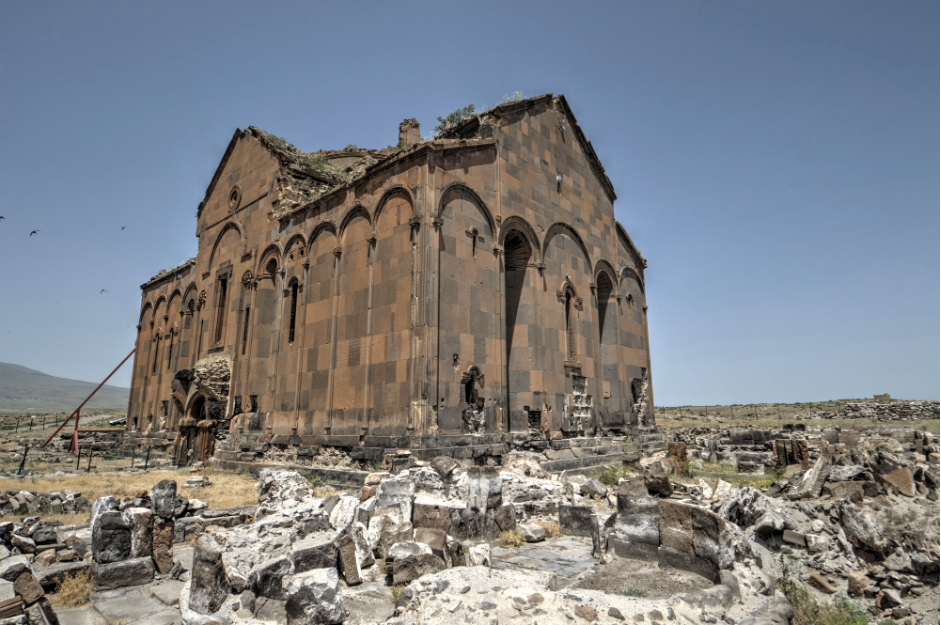
One of the most impressive buildings in Ani is the Cathedral, also known as the Fethiye Mosque. Construction began in 989 during the reign of King Smbat II and was completed in 1001 under King Gagik I. It was designed by Trdat, one of the most well-known architects of medieval Armenia.
The cathedral is a remarkable example of Armenian architecture. Its large interior, pointed arches, and carefully designed stonework reflect the advanced architectural skills of the period. Following the Seljuk conquest of Ani in 1064, the cathedral was converted into a mosque to meet the need for a worship place, according to historical accounts, and became known as the Fethiye Mosque.
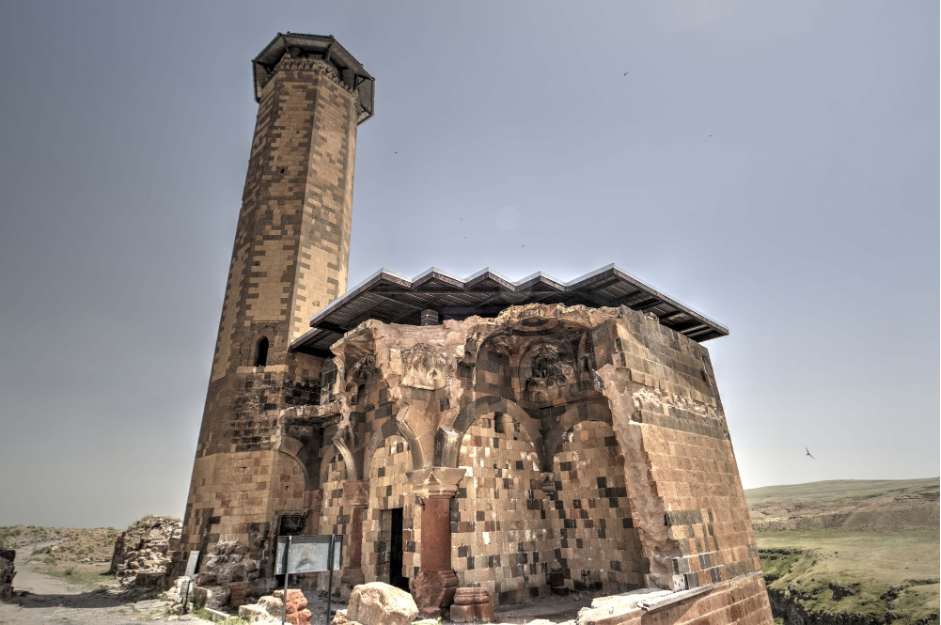
Menuçehr Mosque
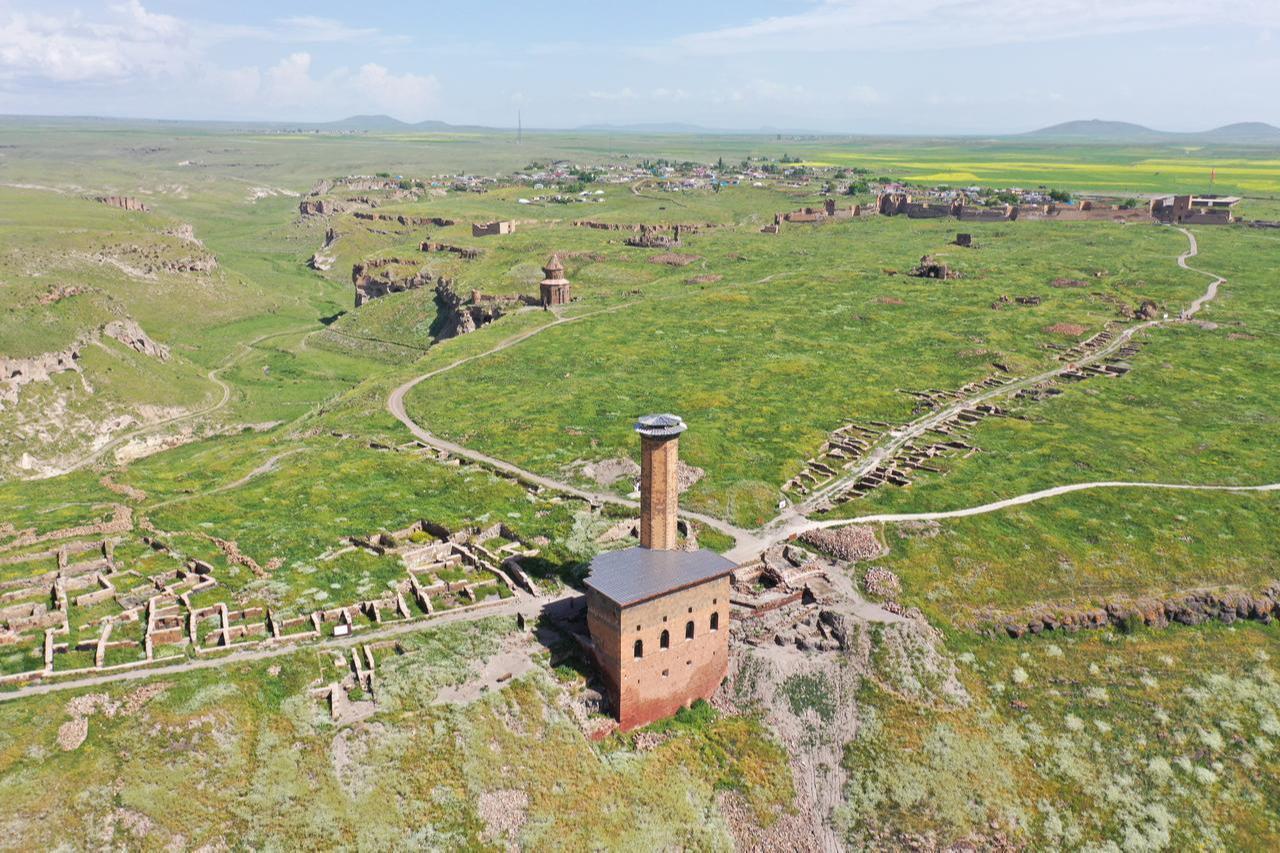
Menuçehr Mosque is one of the most important examples of early Turkish-Islamic architecture in Anatolia, as it is considered as the oldest Turkish mosque that is still in the borders of Türkiye. It is generally dated to the late 11th century and is traditionally associated with Menuçehr, the Shaddadid ruler of Ani.
The mosque is particularly notable for its minaret, which is one of the oldest surviving minarets in Anatolia. Its architectural design combines local building traditions with features of early Islamic architecture.
Church of St. Gregory of Tigran Honents
Built in 1215, the Church of St. Gregory of Tigran Honents was commissioned by Tigran Honents, a wealthy Armenian merchant, whose name is associated with the church.
The building is especially famous for its well-preserved wall paintings, or frescoes. These paintings depict scenes from the Bible, the life of Jesus, and the lives of important Christian figures. They provide valuable information about the religious beliefs and artistic traditions of medieval Armenian society.
The church's architecture is also worth examining. Its exterior features decorative stonework, while its interior contains a series of paintings that cover much of the wall surface.
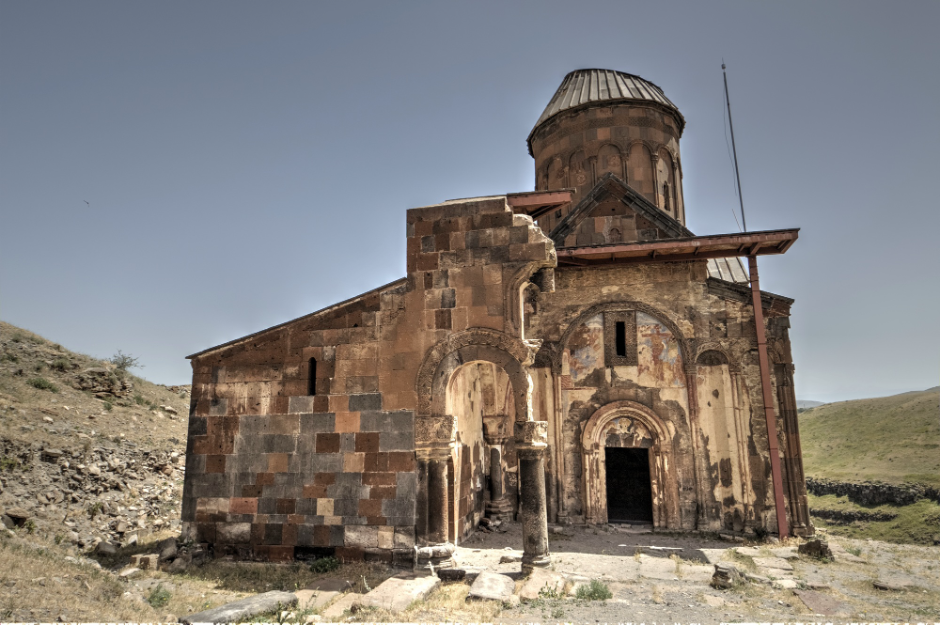
Church of St. Gregory of Abughamrents
The Church of St. Gregory of Abughamrents is another important religious monument in Ani. Dating from around the 10th century, it is believed to have been built for the Abughamrents family. Unlike some of the larger churches in Ani, this building has a relatively small and compact design.

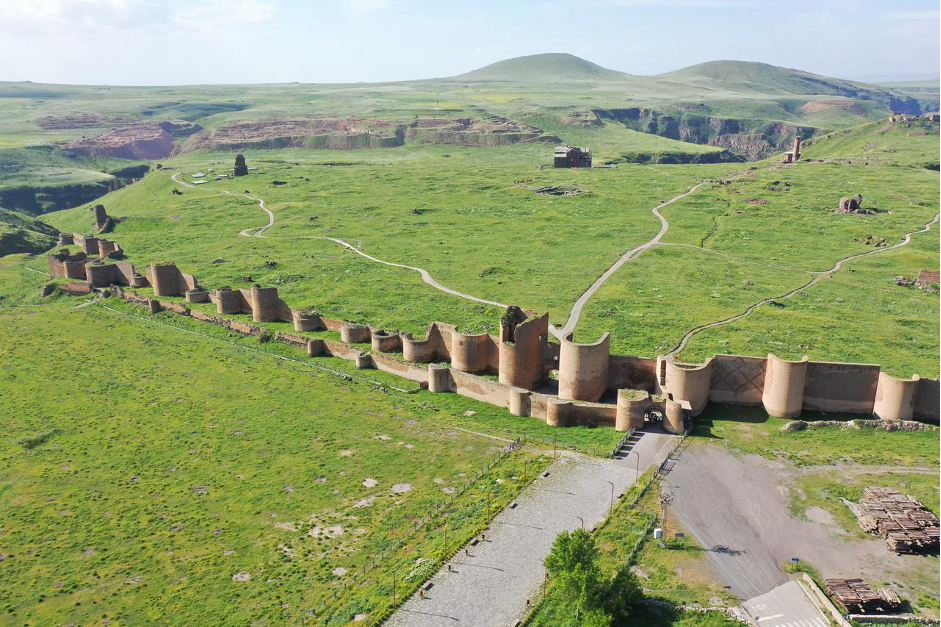
City Walls and the Lion Gate
Ani was surrounded by a strong defensive wall system designed to protect the city from military attacks. The fortifications were particularly developed during the reign of King Ashot III in the 10th century and were strengthened by later rulers. They included defensive towers, gates, and other structures designed to protect the city.
One of the best-known entrances is the Lion Gate, named after the lion relief carved into the stone above the entrance. The lion was an important symbol in medieval art and was often associated with strength and royal power.
Walking along the remains of the city walls offers visitors an opportunity to imagine what Ani looked like during its most prosperous period, when it was one of the leading urban centres of the region.
The Silk Road Bridge
The remains of the Silk Road Bridge can be found near the Akhurian River, which forms the natural border between Türkiye and Armenia. Although much of the original structure has collapsed, the surviving remains provide evidence of Ani's importance as a commercial centre. The bridge was part of the trade routes connecting Anatolia with the Caucasus and other regions further east. Merchants and travellers used these routes to transport goods and establish commercial relationships between different cities and communities.
Today, walking through the ancient streets of Ani is like travelling back in time. Its impressive architecture, historic city walls, and breathtaking natural surroundings make it one of the most remarkable heritage sites in Türkiye. For anyone interested in history, architecture, or cultural diversity, Ani is undoubtedly a place worth visiting. It reminds us that cultural heritage belongs not only to the past but also to our shared human history, which deserves to be protected and passed on to future generations.