
THE POWER AND MEANING OF THE BASMALA
If you're not a Muslim, this might be the first time you're hearing the word basmala. While it doesn’t have a direct translation in English, what it represents is deeply powerful and essential in Islam and in the daily lives of Muslims.
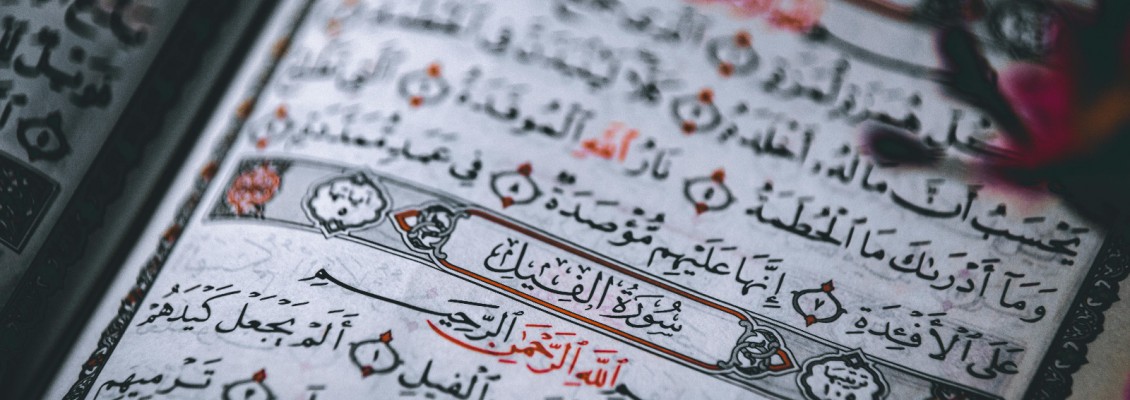
Basmala refers to the phrase “bismillāhir-raḥmānir-raḥīm”: In the Name of Allah—the Most Compassionate, Most Merciful. This seemingly simple phrase is so powerful that it shapes how Muslims view the world and their relationship with the Divine. It centres one’s existence, intentions and actions around the awareness of God’s presence, mercy, and guidance. It is a way to remember His compassionate attributes, seek His guidance, avoid evil and most importantly take shelter in Allah in everything we do.
Muslims begin nearly every act—whether reading, eating, traveling, writing, or even entering a room—by reciting the basmala. It serves as a reminder that all actions should be undertaken with the consciousness of God and with a sense of humility and gratitude. It reflects the core Islamic belief that God’s mercy encompasses all things, and that by invoking His name, a believer seeks both divine blessing and moral mindfulness.
The first verses revealed to the Prophet Muhammad (peace be upon him) began with a powerful command: "Recite." These verses are;
Read, ˹O Prophet,˺ in the Name of your Lord Who created—
created humans from a clinging clot.
Read! And your Lord is the Most Generous,
Who taught by the pen—
taught humanity what they knew not. [The Quran 96:1-5]
These verses not only instruct us to read in the name of Allah but also remind us of the nature of our existence. We were created by Allah’s will, sustained by His mercy, and endowed with the gift of knowledge. Our fragile and limited existence in contrast to the infinite knowledge and generosity of Allah shows us that we are in constant need of guidance and mercy from the creator. We know whatever happens, it is through Allah’s wisdom. It is through His mercy and guidance that we find purpose, direction, and meaning in life and basmala reminds us of this.
The basmala includes two of the most powerful and beautiful names of Allah: Ar-Raḥmān (The Most Compassionate) and Ar-Raḥīm (The Most Merciful). These names emphasize Allah’s infinite mercy and kindness toward His creation. By reciting the basmala, we are not only beginning our actions in His name, but also consciously reminding ourselves of His compassionate nature. As flawed and limited human beings, we are in constant need of Allah’s mercy and guidance. The basmala becomes a means of seeking that mercy—acknowledging that we make mistakes, fall short, and are dependent on our Creator for strength, forgiveness, and direction. It is both a statement of humility and a plea for divine support.
The basmala is sometimes preceded by the phrase known as the Ta‘awwudh: — the phrase “I seek refuge in Allah from Satan, the accursed.” By reciting this, Muslims seek protection from the evil whispers, intentions, and action. It is a way of spiritually preparing oneself before engaging with the Qur’an or any meaningful task, ensuring that one’s heart and mind are guarded against negative influences. Following the Ta‘awwudh with the basmala completes a powerful spiritual formula: first, seeking refuge from evil, and then consciously reminding oneself with the name, mercy, and guidance of Allah. Together, these phrases reflect a believer’s desire to stay on the straight path and act with sincerity and righteousness.
Reciting the basmala sets our intentions clearly before we take any action. It serves as a reminder that whatever we do, we do it with the permission of Allah and for His consent. By saying the basmala, a Muslim is essentially declaring that their action is not for themselves or any other being but for Allah —seeking His approval and staying within the bounds of what He has permitted. Therefore, this phrase transforms ordinary actions into acts of worship. It keeps the believer mindful that every moment of life is connected to a higher purpose and that every deed, no matter how small, should be aligned with faith.
Leave a Comment